Check the acquisition promise
Read the store headline, screenshots and description. What problem is the app promising to solve?
Study the storefront ↗
Jan Berkel · iOS
Explore the ad evidence, study the storefront, and build your next acquisition hypothesis.
01 / Creative research
Read the store headline, screenshots and description. What problem is the app promising to solve?
Study the storefront ↗Explore apps with direct store-link matches. Compare their hooks and formats without assuming the same approach works here.
Browse observed advertisers ↗Store rankings and revenue estimates describe market context. They do not establish ad spend, conversions or ROAS.
Review the market context ↗02 / Storefront & product
Study the product story and store experience behind the acquisition funnel.



03 / Market context
Keep revenue, downloads and store rankings separate from advertising performance.
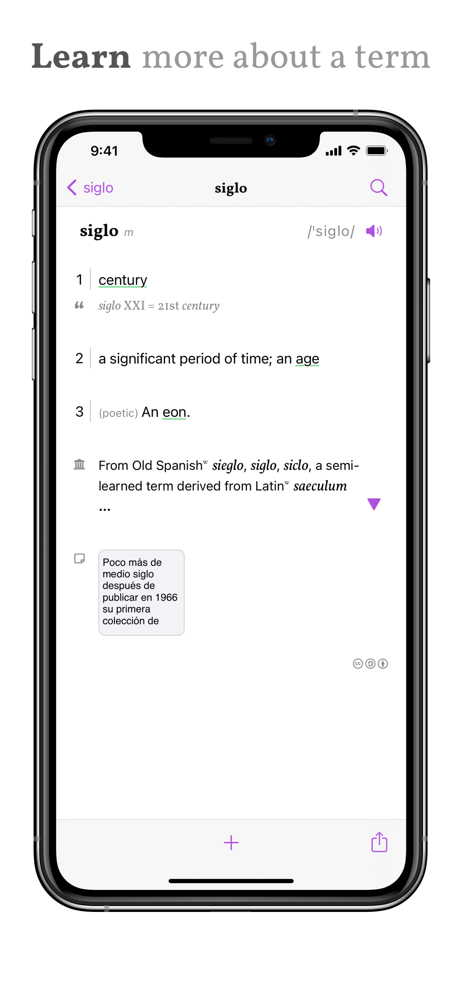
If you are looking for a good Wikitonary interface so you don’t need to keep going to the mobile version of the site, then I think you will find this app is exactly what you are looking for. I had been looking for something like this for awhile, and someone recommended this to me. Super thankful to have found it. The developer also has been super friendly the times I’ve sent feedback. If you a learning a language with a lot of inflictions, such as Finnish, the one thing about the app is that it doesn’t have infliction tables loaded in (at least for Finnish). The developer told me they are working on a way to incorporate them, but that it’s a challenge because of just how many there are. Regardless, I still absolutely highly recommend the app, just know you will still have to keep a wikitonary page open in your browser for when you can’t remember how to inflict something (for now).
I am delighted that ancient Greek (and modern, too,but especially ancient) has come to Moti, but this version is still quite buggy on MacOS. It does not allow search in Greek (αλλότριος can be found using English characters as “allotrios” but not in Greek) and crashes even when searching in English. For example, I can’t search for περισπωμένως in ancient Greek, but can begin to search in English, to a point. I can search up to “peri” but Moti crashes after that. It is not clear if Moti needs or requires accents and diacritics to function. If so, its utility would be compromised, since the keyboard combinations to enter all the markings are cumbersome and time consuming, Entering approximations in English/Latin characters would be quickest, but only if the program doesn’t crash each time the search string gets to be longer that 3-4 characters. Anyway, thanks for making this available, and good luck with the bug fixes!
With multilingual support (only shows the section of that language) and offline dictionary, this is a lifesaver for me as I live in China and can't access Wiktionary without a VPN. Feature requests: 1) for Russian and Ukrainian, showing the verbal aspect would be great (whether the verb is perfective/imperfective, and even better if the counterpart is also shown). This is important because the aspect determines the meaning of the verb, e.g. whether it's "I'm doing" or "I'll do". 2) for Russian, Ukrainian, Latin, and maybe some other synthetic languages, it would be nice to show the inflection table (conjugation/declension). This might not be needed for agglutinative languages like Korean or Turkish, where the inflections are almost all regular. But in synthetic languages words often have irregular forms. Alternatively, it would suffice to show the basic grammatical forms/notes listed on Wiktionary next to the entry form (such as for Lat. "habeo", habere, habui, habutum, 2nd conjugation, or for Lat. "corpus", corporis, 3rd declension) -- a good substitution if tables would be unwieldy to display/implement. 3) For all languages: some apps like Google translate would automatically switch the keyboard depending on the language you select. Would be very handy to add to this app.
Get definitions for words in more than 40 languages and boost your language learning efforts with flashcards exported to AnkiMobile. Based on free dat...