
Check the acquisition promise
Read the store headline, screenshots and description. What problem is the app promising to solve?
Study the storefront ↗
Shridhar Gupta · iOS
Explore the ad evidence, study the storefront, and build your next acquisition hypothesis.
01 / Creative research
Read the store headline, screenshots and description. What problem is the app promising to solve?
Study the storefront ↗Explore apps with direct store-link matches. Compare their hooks and formats without assuming the same approach works here.
Browse observed advertisers ↗Store rankings and revenue estimates describe market context. They do not establish ad spend, conversions or ROAS.
Review the market context ↗02 / Storefront & product
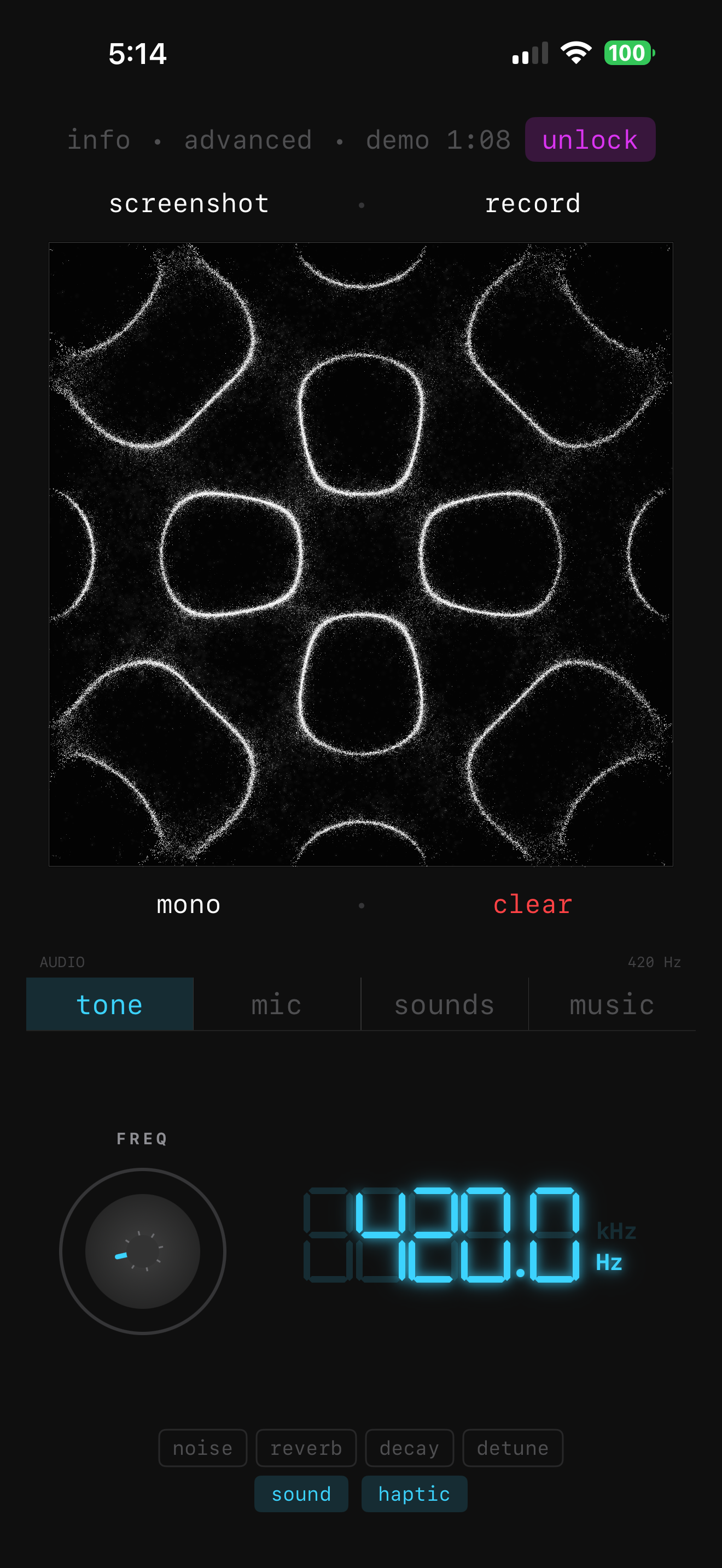
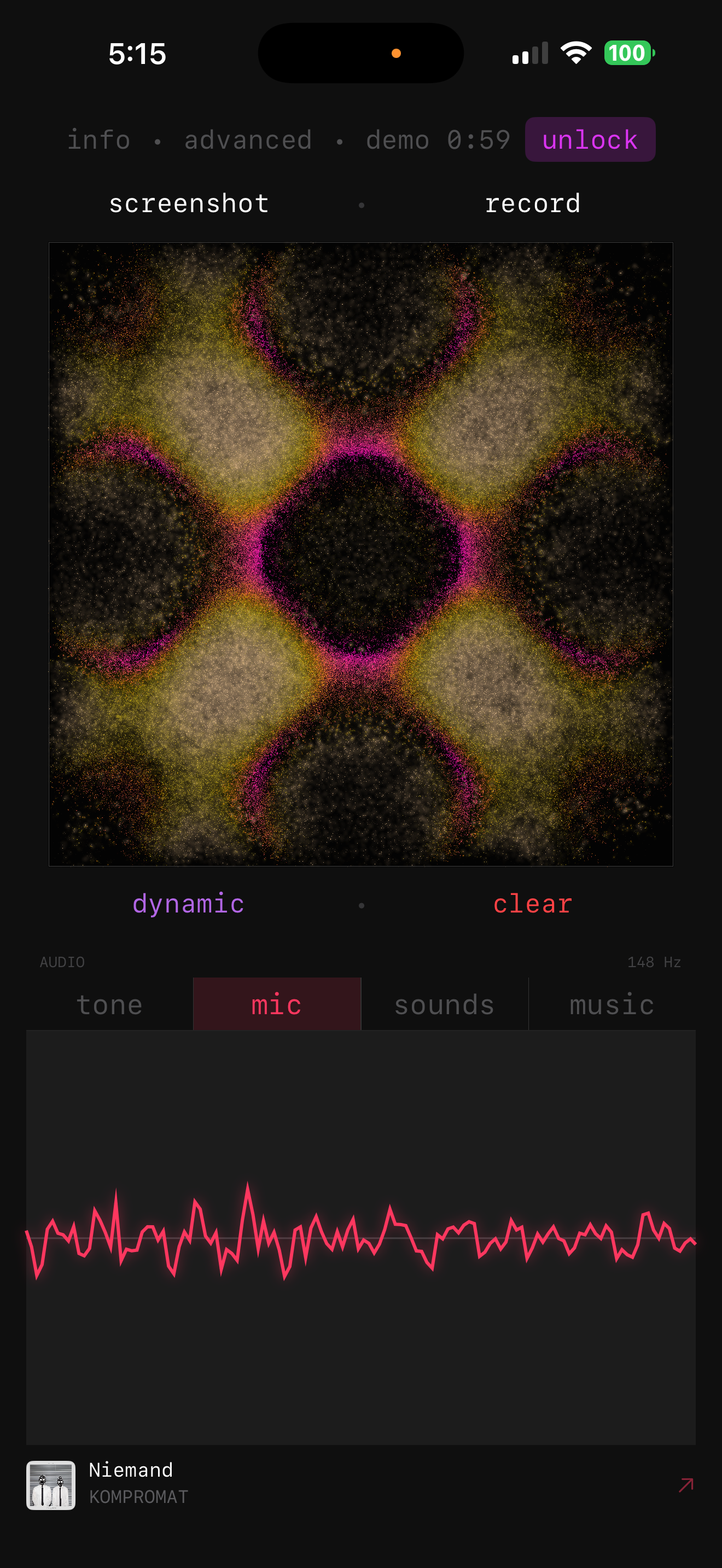
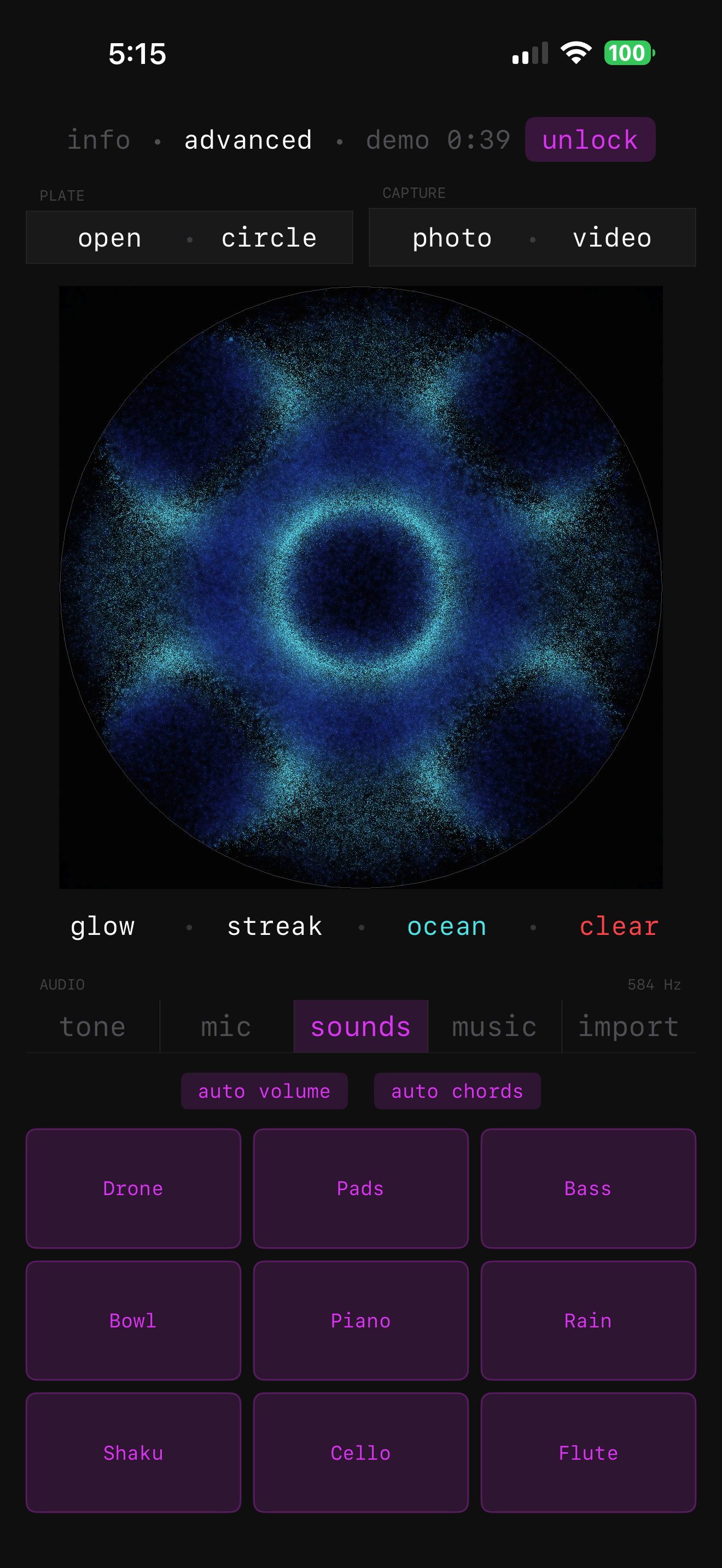
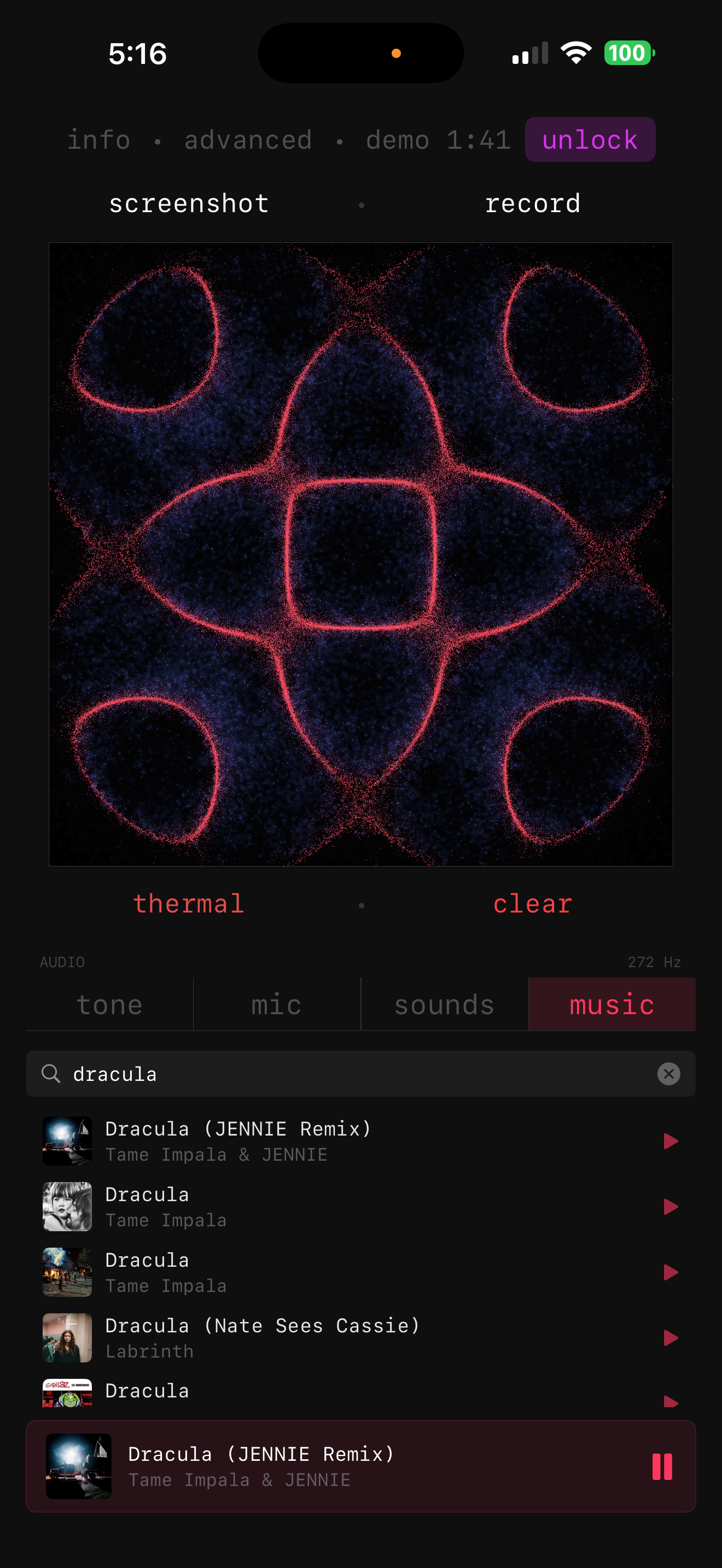
Study the product story and store experience behind the acquisition funnel.


03 / Market context
Keep revenue, downloads and store rankings separate from advertising performance.
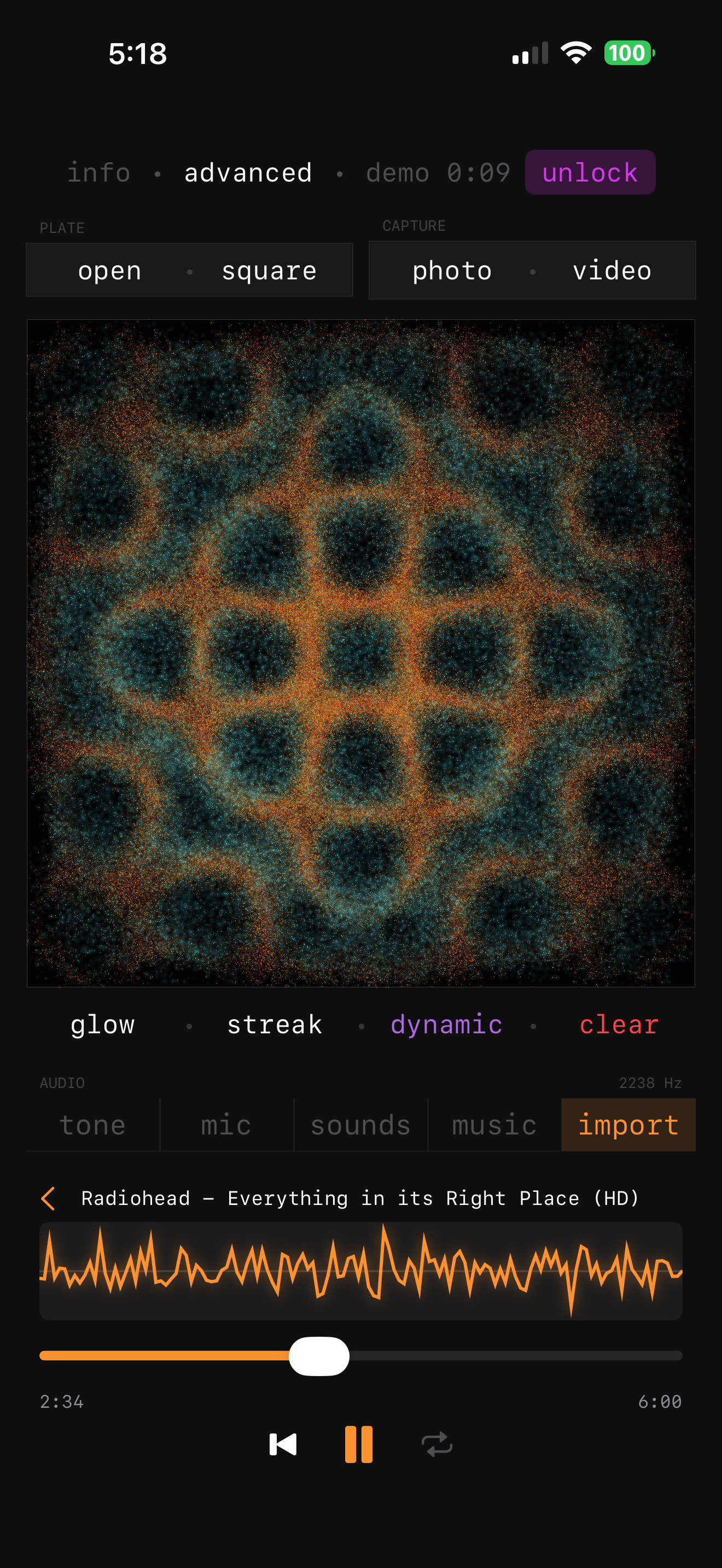
UPDATE: I love the new changes. More like using a real signal generator. I can’t believe someone took the time to create this. This is the best Chladni Plate simulator in the App Store. Really, it’s the ONLY ONE. There’s a difference between a Chladni and Cymatics. Cymatics mainly uses water & light whereas Chladni Plates uses sand on a plate. If this developer could make a Cymatics app like this, I’d be over the moon! Either way, big props to the developer of this app!
I was about to spend a lot more for a physical Chladni plate and came across this app. It is nearly perfect. I have only 2 asks that I think would make it even better: 1) an option to switch to sliders for the M and N values (and maybe manually enter them), 2) an option to “normalize” the spread of the sand because drawing is fine, but the assymetric spreads really triggers something in me.
Just randomly bought and played around with this, and as a sound designer / (visual) artist, plus someone who’s fascinated with physics, including quantum mechanics, which this absolutely relates to in terms of fields of probability, this is great. A couple features I’d really love to see in addition to the mic input suggested in another comment, would be to feed Audio Unit app sound into it, or at least be able to choose from some other basic waveforms (i.e.: pure sine, triangle, saw, and square waves - ideally with pulse width modification as a bonus). That could really elevate the reusability of the app. Also being a software/web developer as a day job, I could see expanding this in plenty of other fun ways, like color gradients/themes for the digital “sand” particles here, and so on. Anyway, great work so far and hats off - hope this continues to be developed!
Transform sound into stunning visual art. Cymatica is an interactive physics simulation that brings Ernst Chladni's 18th-century discovery to life on...
| Name | Price | Type |
|---|---|---|
| Cymatica Pro (Monthly) | $3.99 | Monthly |
| Unlock Sounds | $4.99 | One-time |
| Cymatica Pro (Annual) | $19.99 | Yearly |
| Cymatica Pro Lifetime | $24.99 | One-time |


