
Check the acquisition promise
Read the store headline, screenshots and description. What problem is the app promising to solve?
Study the storefront ↗
Eric Hamiter · iOS
Explore the ad evidence, study the storefront, and build your next acquisition hypothesis.
01 / Creative research
Read the store headline, screenshots and description. What problem is the app promising to solve?
Study the storefront ↗Explore apps with direct store-link matches. Compare their hooks and formats without assuming the same approach works here.
Browse observed advertisers ↗Store rankings and revenue estimates describe market context. They do not establish ad spend, conversions or ROAS.
Review the market context ↗02 / Storefront & product
Study the product story and store experience behind the acquisition funnel.

03 / Market context
Keep revenue, downloads and store rankings separate from advertising performance.
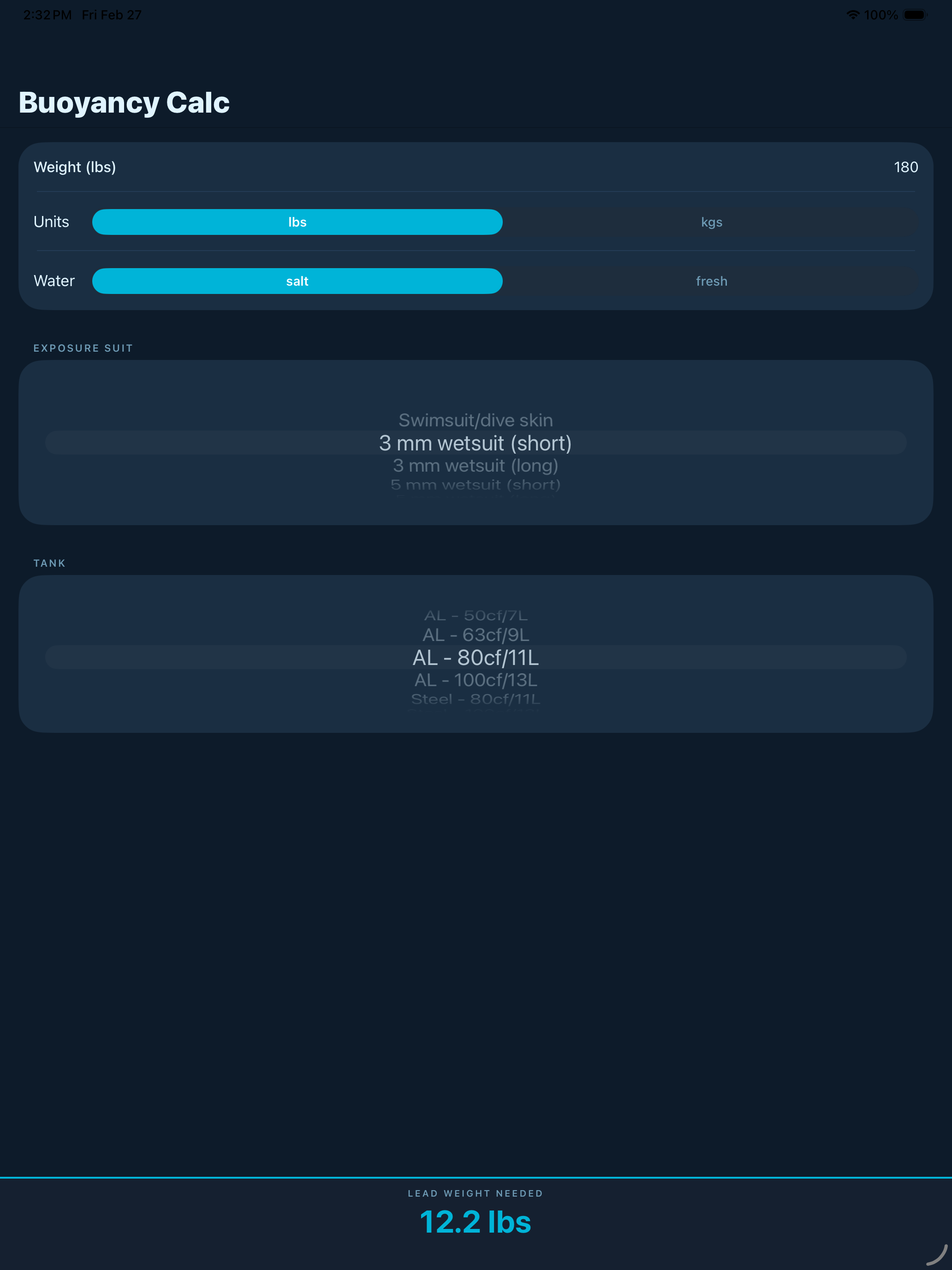
The app recommends 28 pounds based off of my standard setup but I dive with 24. Still though I would say this seems to give a decent estimate.
Not bad as it will get you somewhere near your required weight. I’ve used this as a weight estimator for my students and it always overweights them sometimes by a significant amount. Once you get used to it you’ll start to come up with a fudge factor that works for you. Once you know what your fudge factor is properly weighting yourself when changing tanks, exposure suits and environment becomes a snap.
This is hands down the best buoyancy calculator app on the market. I should know, I’ve used them all. I consider myself a seasoned diver, having dove with all the greats. Pete Lecrerc, Sunny Drinkwater, you name em. But for some reason I can never seem to sink as well as them. This app has changed everything. I am basically a well calculated rock, it’s the best. Jokes aside, this is a solid app, you should download it.
Quickly find out the suggested weight you should add when scuba diving in different environments. Based on PADI's Peak Performance Buoyancy basic weig...


