Check the acquisition promise
Read the store headline, screenshots and description. What problem is the app promising to solve?
Study the storefront ↗
University of California, Los Angeles · iOS
Explore the ad evidence, study the storefront, and build your next acquisition hypothesis.
01 / Creative research
Read the store headline, screenshots and description. What problem is the app promising to solve?
Study the storefront ↗Explore apps with direct store-link matches. Compare their hooks and formats without assuming the same approach works here.
Browse observed advertisers ↗Store rankings and revenue estimates describe market context. They do not establish ad spend, conversions or ROAS.
Review the market context ↗02 / Storefront & product
Study the product story and store experience behind the acquisition funnel.


03 / Market context
Keep revenue, downloads and store rankings separate from advertising performance.
This app is a complete joke! I expected SO MUCH BETTER from a well known university music department. I am a graduate from a private music conservatory and I am aware that UCLA has a decent music department. So, I expected a music theory app that actually is LEGIT. I don’t even know where to start, because all of it is so bad. Did a REAL professional musician with a degree in music theory even check to see that this app has proper exercises that aren’t incorrect?? Heck, I also seriously hope that a professor from UCLA(or any other school) with a degree in music theory did not write any of these lessons, because if they ARE a professor of music theory from UCLA or other university, they should be very embarrassed!! For example, the chord progression dictations are ridiculous, and part writing rules are broken EVERYWHERE!!! Good LORD... My theory teacher would have KILLED us had we written such horrible progressions. A big fat F would be given. WHO WROTE THIS INCORRECT DRIVEL?? The melodic dictation is a mess as well. Never mind the rest of the app. I can’t even begin to write what’s wrong with all of it, because there is so much that is incorrectly written. The whole app should be dumped and a real music theory professor with actual skill should be hired to write the and develop the exercises for app use. Please take a good look at Musica Practica. That is a music theory ear training and comprehensive dictation computer program for music majors that is used by the best music conservatories and top university music departments as an aid to their ear training and music theory classes. That is how an app like this put out by a university should be like!! SHAME on the UCLA music department for letting this app go live. It’s a disgrace!! I am sorely disappointed because I was hoping for a quality app that would be a great review tool to keep my skills up. EPIC FAIL!!!
..right or wrong I would certainly keep promote the concepts brought forth in Theory of Harmony and the concise Structural Functions of Harmony, if for no other reason than to keep in the music student’s conscious, the unique pedagogical style that developed alongside the immense groundwork laid down by the master. Schoenberg, coming to the States only to find the level of music education rather poor and backwards pulled no punches in the preface to his last and possibly most important book, “Structural Functions of Harmony.”“Unfortunately the understanding of harmony by many students is superficial, and foreign to the procedures of great composers. This is caused by the general use of two obsolete teaching methods. One, consisting of writing parts above a figured bass, is much too easy a task; the other, harmonizing a given melody, is too difficult. Both are basically wrong.”and“Of course, part-leading must not be allowed to be a handicap to one who attempts these advanced studies. One who cannot control four parts with a certain ability either has not worked seriously or is entirely untalented and should give up music at once.”Schoenberg was trying to say that studying harmony without having a working knowledge of counterpoint (which is time, or rather harmony is the resulting sound of counterpoint over time), is a futile exercise. Don’t let his tremendous body of pedagogical work get lost in today’s world of “music theory in five minutes” nonsense. It’s difficult for a reason. Take this for example. Where does one find the so-called Neapolitan chord? Hmm? Very simple. It’s the submediant of the minor subdominant. Schoenberg built the UCLA school of music. Honor him by reading Structural Functions of Harmony. You’ll be forever glad you did. What does this review have to do with this app? I’ll let you decide for yourself. That’s what Schoenberg would have done.
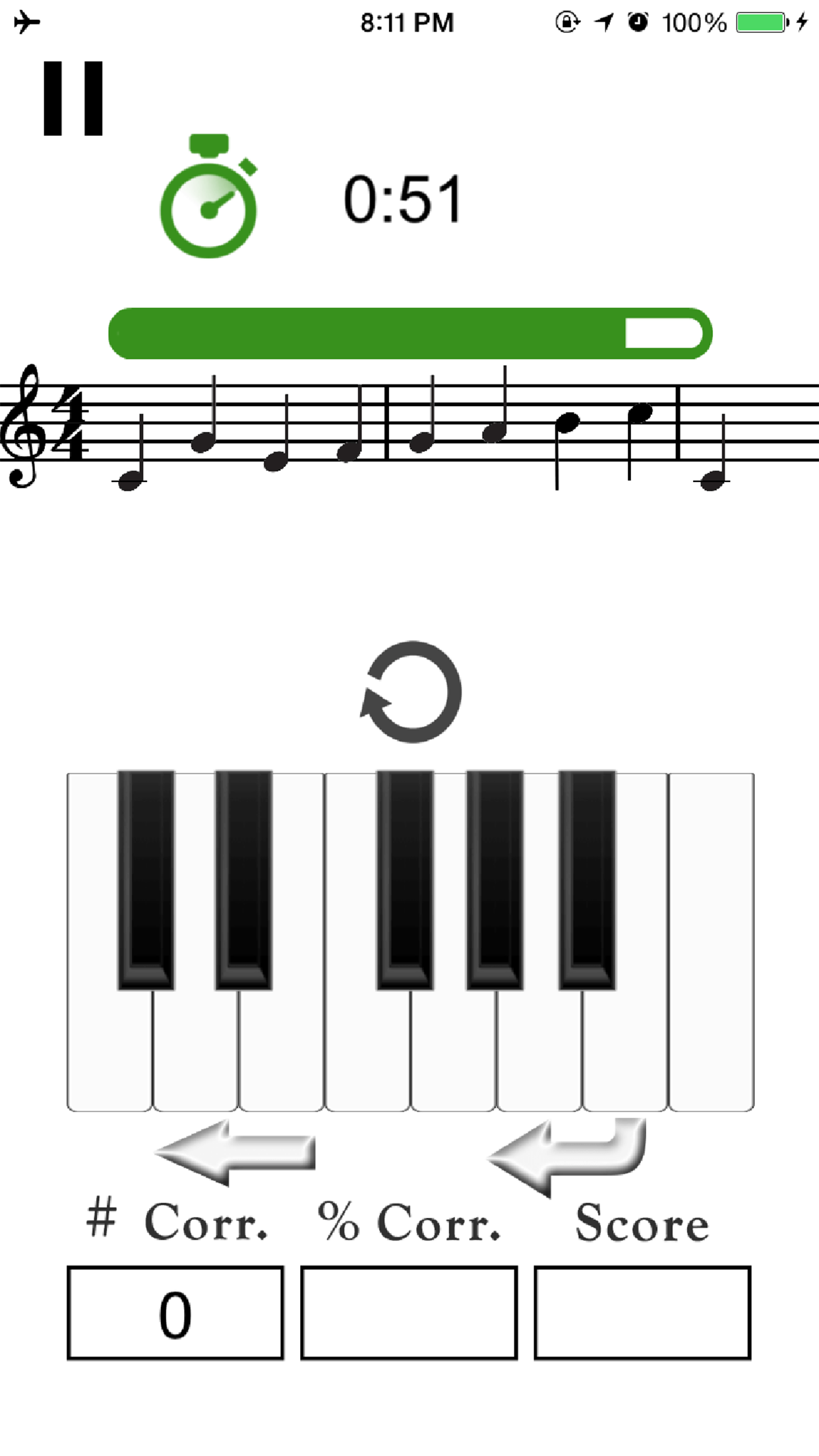
Things I love: -sight reading mode -both interval modes -triad quality mode -score tracking -the tests don't stay strictly in one key -the “press here to hear all the chords” page (make that easier to find!) Errors/Bugs: -Chord progression test plays major chords only instead of the diatonic chords (it plays a major II, III, VI instead of minor and even a major VII instead of a diminished) -rhythm dictation test reads some correct answers as wrong -melodic dictation test plays notes below the keyboard’s given range (the B below middle C for example). answers notating it an octave higher are not counted -seventh chord quality mode tells you whether you got a right or wrong answer but doesnt keep track of your score. you always get 0%. Suggestions: -practice mode for every test -every mode should have its own settings page -adjustable timer length for survival mode -adjustable key, pitch range, phrase length for melodic dictation -adjustable phrase length and the ability to choose what note types to practice in rhythm dictation -minor key chord progression mode -ability to customize what triads, seventh chords, intervals you want to practice I hope they fix all this stuff so I can come back back and change my rating to 5 stars.
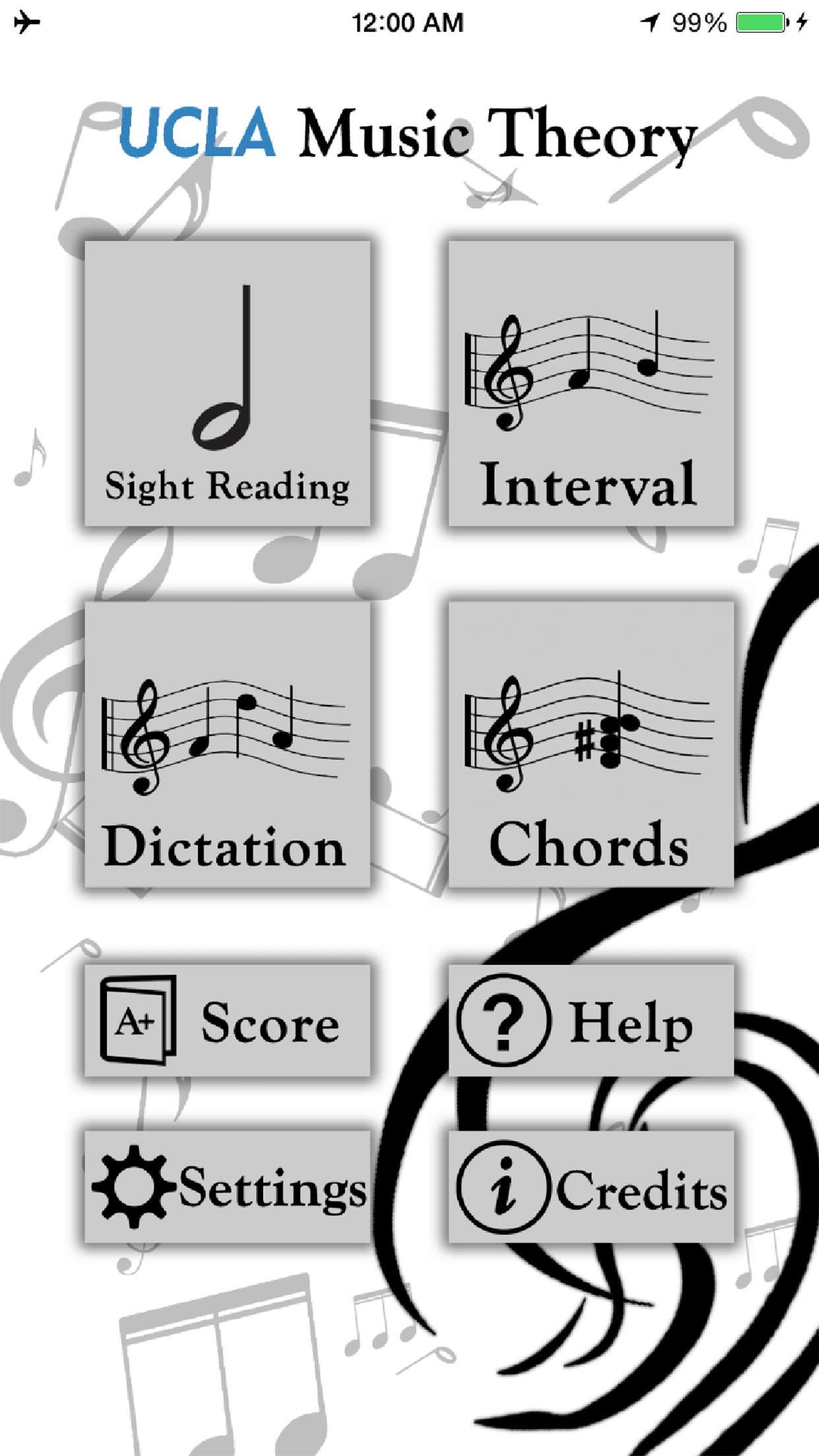
This app is designed as a supplemental for students to practice ear training in music theory. Currently, the app has 4 different training modules: -...