Check the acquisition promise
Read the store headline, screenshots and description. What problem is the app promising to solve?
Study the storefront ↗
Columbia University, University of Maryland, and Smithsonian Institution · iOS
Explore the ad evidence, study the storefront, and build your next acquisition hypothesis.
01 / Creative research
Read the store headline, screenshots and description. What problem is the app promising to solve?
Study the storefront ↗Explore apps with direct store-link matches. Compare their hooks and formats without assuming the same approach works here.
Browse observed advertisers ↗Store rankings and revenue estimates describe market context. They do not establish ad spend, conversions or ROAS.
Review the market context ↗02 / Storefront & product
Study the product story and store experience behind the acquisition funnel.
03 / Market context
Keep revenue, downloads and store rankings separate from advertising performance.
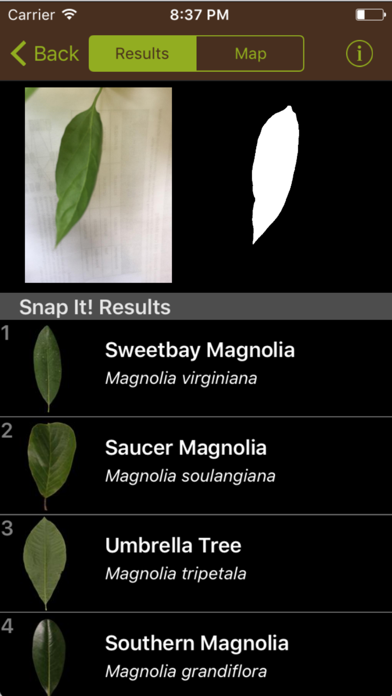
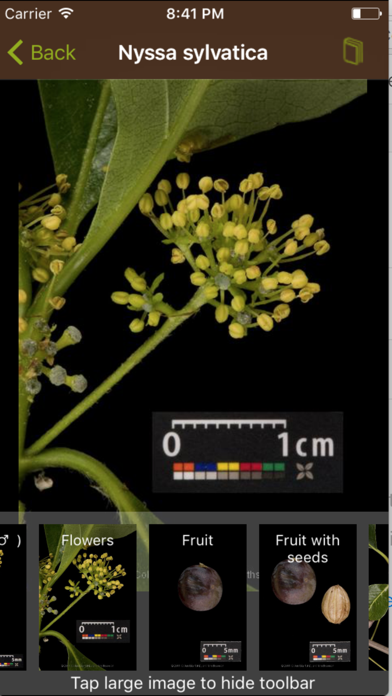
Even knowing the vagaries of WiFi connectivity in the field and the proliferation of invasive & non-native species in suburbia, this app has repeatedly failed to be of any real use. My “collection” of two unidentifiable leaves remains a total mystery to the app, which keeps making suggestions of VERY different-looking leaves. (It once told me a pin oak was a maple, so I’m not too surprised.) The constant inability to access the servers when outdoors led to my photographing some very wilted leaves in an attempt to get them back indoors with a reliable WiFi connection — but lately even that has been failing with repeated, “RECOGNITION ERROR - Failed to poll server” errors even with a good WiFi connection that other apps are having no problems using. The only reason this app is still on my iPhone is that I can (sometimes) scroll through pictures in an attempt to manually ID a tree... which often leads to better results than the “Snap It!” function. Definitely needs a LOT of work, or at least a change in advertising & name so people know they cannot depend on what is supposed to be the app’s primary feature and function. Would give it 1 star if the pictures in the database (assuming I can access them) weren’t clear... but in reality I give it 1½ stars at best in its current form.
Even knowing the vagaries of WiFi connectivity in the field and the proliferation of invasive & non-native species in suburbia, this app has repeatedly failed to be of any real use. My “collection” of two unidentifiable leaves remains a total mystery to the app, which keeps making suggestions of VERY different-looking leaves. (It once told me a pin oak was a maple, so I’m not too surprised.) The constant inability to access the servers when outdoors led to my photographing some very wilted leaves in an attempt to get them back indoors with a reliable WiFi connection — but lately even that has been failing with repeated, “RECOGNITION ERROR - Failed to poll server” errors even with a good WiFi connection that other apps are having no problems using. The only reason this app is still on my iPhone is that I can (sometimes) scroll through pictures in an attempt to manually ID a tree... which often leads to better results than the “Snap It!” function. Definitely needs a LOT of work, or at least a change in advertising & name so people know they cannot depend on what is supposed to be the app’s primary feature and function. Would give it 1 star if the pictures in the database (assuming I can access them) weren’t clear... but in reality I give it 1½ stars at best in its current form.
I just downloaded the app from the US iTunes Store and tried to create an account but failed. I also can't choose my location because my location (Germany) isn't one of the options. Not sure if that is why I can't create an account but I'm disappointed I can only use this for scrolling through the built-in pictures. Please consider an option for other locations. There are lots of trees here that can be found in the US that I would like help identifying.
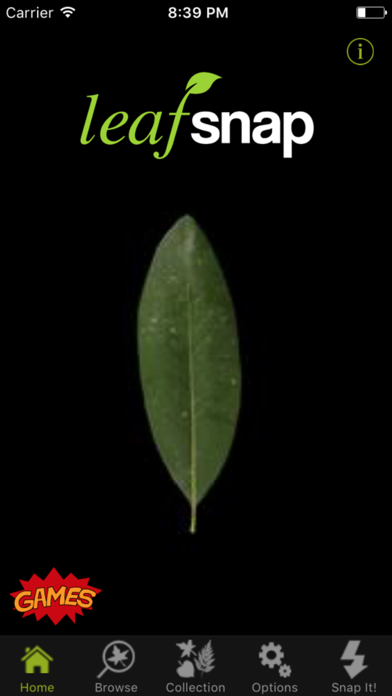
Leafsnap is the first in a series of electronic field guides being developed by researchers from Columbia University, the University of Maryland, and...